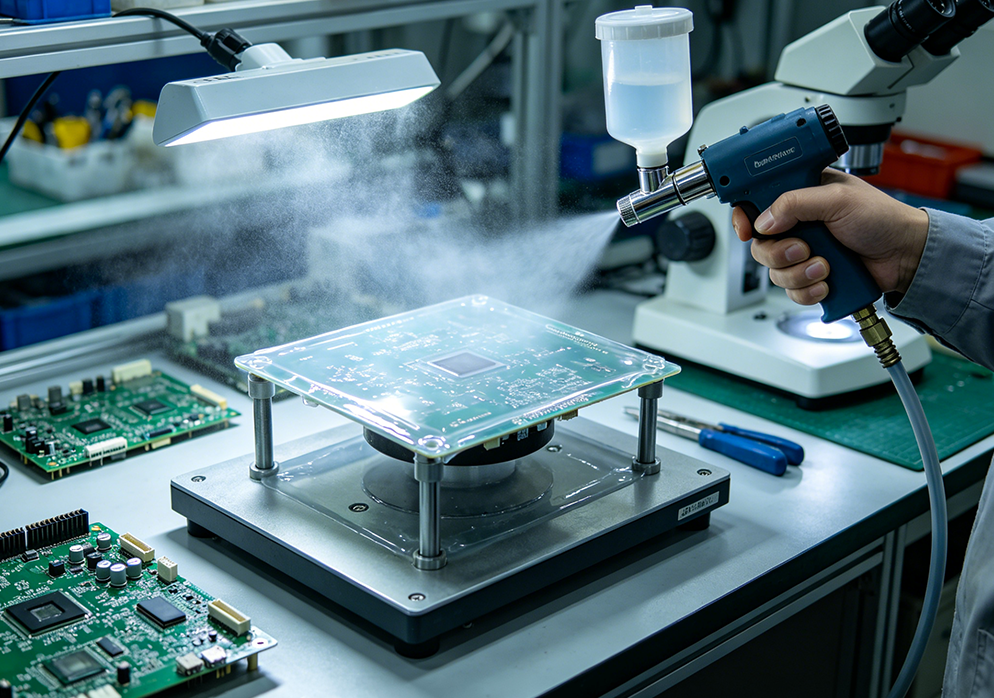
Thermal conductive silicone grease is a paste-like thermal interface material made by grinding and mixing specialty silicone oil as the base oil with high-thermal-conductivity, high-temperature-resistant inorganic fillers. Its basic design logic is not to rely on itself to become the main heat conduction body, but rather to use its soft paste form, under assembly pressure, to fully fill the microscopic depressions and gaps invisible to the naked eye between the heat-generating component and the heat sink, squeezing out the air, whose thermal conductivity is only about 0.026 W/(m·K), and establishing an efficient heat transfer path through the material's own thermal conductivity, thereby greatly reducing the interfacial contact thermal resistance.
Contact UsThe core feature of thermal silicone grease is that it fills the microscopic gaps between solid interfaces and displaces low-thermal-conductivity air, thereby significantly reducing contact thermal resistance. In essence, it is an insulating interface material with high thermal conductivity, good thixotropy, and long-term reliability. It does not rely on its own high thermal conductivity to replace the connection between the heat source and the heat sink; rather, without applying excessive pressure, it uses its paste-like form to achieve 100% interface wetting and form an efficient heat conduction path at the thinnest possible thickness.
??Computer and server hardware: Interface filling between CPU/GPU and heat sinks, the most widely known application.
??High-power power supplies and power electronics: Heat conduction between high-heat-generating semiconductors such as IGBT modules and MOS tubes in frequency converters, inverters, and UPS power supplies and heat sinks.
??LED lighting and displays: Thermal coupling between the aluminum substrate of LED beads and the heat-dissipating housing of luminaires, which determines light decay and service life.
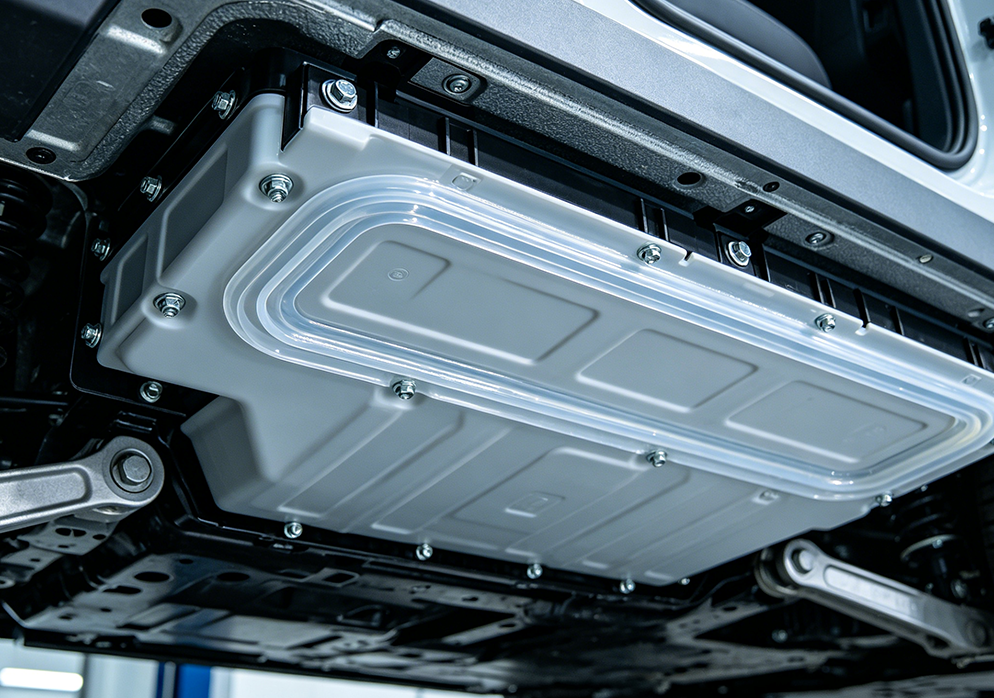
??Automotive electronics: Heat dissipation for main chips and power modules in on-board chargers (OBC), DC-DC converters, and domain controllers.
??Consumer electronics: Heat conduction between the main processor chips of devices such as smartphones, tablets, and routers and shielding covers, heat-dissipating copper tubes, or middle frames.
??Home appliances: Connection between heat-generating components such as power tubes in induction cookers and air-conditioner inverter modules and heat sinks.
??Communication base stations and optical modules: Heat extraction from laser devices in base station power amplifier modules and high-speed optical modules.